


How to Arrange Banquet Seating for Every Guest
A beautiful room can still feel uncomfortable if guests cannot reach their seats, servers cannot move between tables, or family members are separated from the people they came to celebrate. Knowing how to arrange banquet seating means balancing capacity, comfort, traffic flow, and the look of the event - whether you are planning a wedding reception, quinceañera, birthday dinner, graduation, or community gathering.
Start with the room, not the guest count. The usable space, entry points, food tables, dance floor, and service areas will tell you what seating layout makes sense. Then choose the tables and chairs that fit the occasion and build a plan that lets guests relax from the moment they arrive.
Start With the Space You Actually Have
Before selecting tables, measure the event area and mark anything that cannot move: doors, columns, restrooms, a stage, kitchen access, electrical outlets, and tent poles. Also identify the places that need to stay open, such as a buffet line, bar, gift table, dessert cart, photo backdrop, dance floor, or moonwalk entrance.
A room’s posted capacity is not always its comfortable banquet capacity. Guests need room to pull out chairs, walk to their tables, and step away from the table without asking everyone else to move. Once décor, food service, and entertainment are included, an open room gets smaller quickly.
As a general planning rule, leave about 5 feet for main guest aisles and 3 to 4 feet between the backs of chairs at neighboring tables. If servers will carry plated meals or bussing carts through the space, use the wider end of that range. In a backyard tent, consider grass, slopes, landscaping, and where rainwater may collect. A layout that looks good on paper has to work safely on the ground.
Choose a Banquet Seating Layout That Fits the Event
The best arrangement depends on how guests will use the room. A formal dinner has different needs than an open-house birthday party where people arrive and leave throughout the day.
Round tables for conversation and celebrations
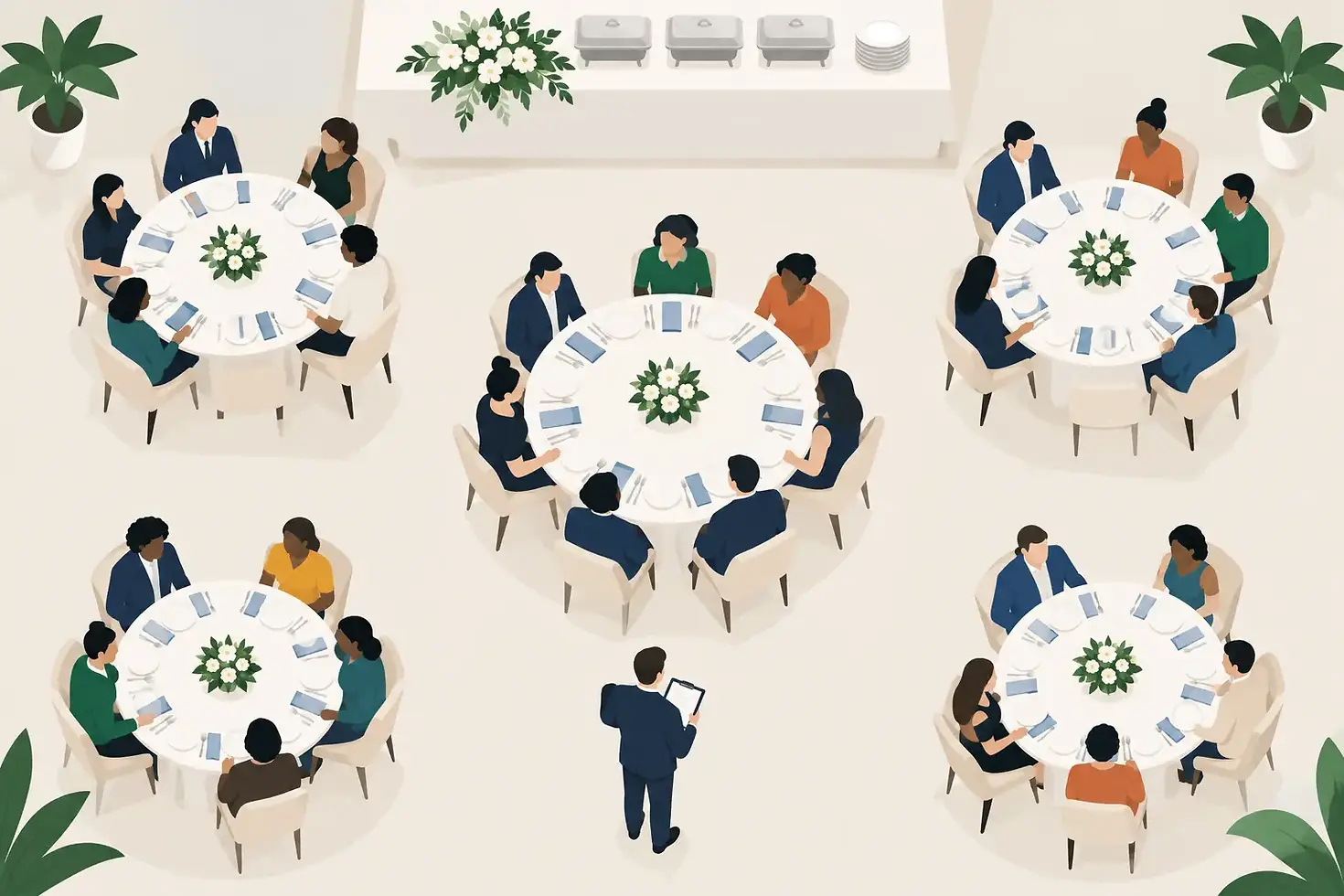
Round tables are a favorite for weddings, anniversaries, and milestone celebrations because everyone at the table can see one another. They also soften a large room and make centerpieces feel intentional. A 60-inch round table commonly seats eight guests comfortably, while 72-inch rounds can seat 10. You may fit more chairs, but tighter seating can make dinner feel crowded, especially when place settings, chargers, favors, or large centerpieces are involved.
Use rounds when the goal is shared conversation. They work especially well around a dance floor because the tables can be placed in balanced rows or gentle arcs instead of rigid lines.
Rectangular tables for flexible seating
Rectangular banquet tables are practical for family-style meals, kids’ parties, graduation celebrations, and events with a long guest list. They can be lined up as long rows, arranged in U-shapes, or placed end to end for a clean, organized look.
An 8-foot banquet table generally seats eight to 10 people, depending on whether seats are placed at both ends and how much space each guest needs. For a formal meal with full place settings, eight is usually more comfortable. For a casual gathering, 10 may be perfectly reasonable.
Long tables create a warm, communal look, but they need thoughtful access. Do not make guests squeeze between a wall and a row of chairs just to reach their place. Keep the ends of long table runs open whenever possible.
Head tables, sweetheart tables, and family tables
For weddings and quinceañeras, decide early where the guests of honor will sit. A sweetheart table gives a couple a private focal point. A head table keeps the wedding party together and creates a festive center of attention. A family table works well when parents, grandparents, and close relatives should be near the celebration without being on display.
Place this table where it has a clear view of toasts, dancing, and the room, but avoid blocking a main traffic route. If guests will take photos nearby, leave extra space behind and beside it. A throne chair, decorative backdrop, artificial trees, or elevated linen can make the area stand out without requiring a complicated layout.
Build Clear Paths Before Filling Every Seat
The most common seating mistake is trying to use every available inch. A few fewer seats can make an event feel much more polished.
Begin with the main route from the entrance to the seating area. Guests should be able to find their table without cutting through a buffet line or walking behind the head table. Next, plan a direct route to restrooms, food, drinks, and exits. Keep children’s activity areas separate from dining paths so adults carrying hot food do not have to navigate around a crowd of excited kids.
Buffets need more room than most hosts expect. Allow space for the line to form and for seated guests to pass behind it. If the buffet is against a wall, leave enough clearance for guests to approach from one direction and exit without creating a bottleneck. For larger events, placing food stations in separate areas can reduce one long line and keep the room moving.
If you have a dance floor, give it breathing room. Tables pressed too close to the dance area can make guests feel like they are sitting in the middle of the party. A clear perimeter also gives photographers, parents, and older guests a better place to watch.
Seat Guests With Comfort in Mind
Once the table map is set, assign people to tables with the experience in mind. Put older relatives and guests with mobility concerns near an easy aisle, restroom access, and a quieter area of the room. Avoid seating them beside speakers, a DJ booth, or a busy bar unless they specifically enjoy the action.
Families with young children often appreciate being close to an exit, restroom, or children’s entertainment area, but not directly beside it. Kids may want to run toward a moonwalk or activity station all evening, so a little distance can help parents enjoy their meal.
Seat guests who know each other together when possible, but do not overthink every connection. A mixed table can be fun when people have something in common, such as family ties, school friends, coworkers, or neighbors. At formal receptions, place-name cards are helpful. At casual parties, a simple table number or a few reserved signs may be all you need.
Make the Layout Look Intentional
Seating should support the style of the celebration. Matching tables and chairs create a clean base, while linens, charger plates, centerpieces, and decorative pieces add personality. For a formal event, use consistent linen colors and align chairs evenly. For a backyard celebration, you can mix table sizes while keeping the chairs, colors, or centerpieces coordinated.
Think about sightlines before adding tall décor. Large floral arrangements and artificial trees can frame an entrance or head table beautifully, but they should not block guests from seeing toasts or talking across the table. Low centerpieces are usually best for tables where conversation is the priority.
A simple focal point helps the whole room feel organized. This could be a cake table, sweetheart table, backdrop, dessert cart, or dance floor. Arrange guest tables around that feature rather than scattering everything evenly without a plan.
Use a Simple Setup Checklist
Before delivery or setup day, confirm the table count, chair count, linen sizes, and seating chart. Add a few extra chairs for unexpected guests, vendors who need a meal, or a damaged chair that must be removed. If you are renting, share the venue measurements and planned guest count so the rental team can help match the right table sizes and quantities.
On setup day, place tables first, then chairs, then linens and décor. Walk every aisle before setting place cards or centerpieces. Pull out a chair at each table to make sure guests can sit down without blocking the path behind them. This quick check catches tight corners that are easy to miss on a diagram.
Pachanga Party Rentals can help bring the plan together with tables, chairs, tents, linens, decorative pieces, cooling equipment, and more, so you can create a guest-ready space without buying and storing supplies you will use once.
The right banquet arrangement does not have to be complicated. Give guests room to move, a comfortable place to sit, and a clear view of the moments that matter. When the layout supports the celebration instead of competing with it, everyone can settle in and enjoy the party.


Comments