


What Size Tent for 50 Guests? Plan It Right
A guest list of 50 sounds straightforward until you picture 50 chairs, full tables, a buffet line, gifts, a cake table, and people moving around comfortably. So, what size tent for 50 guests gives everyone room to celebrate without making the party feel crowded? For most seated events, a 20-by-40-foot tent is a practical starting point. If you want a dance floor, bar, buffet, or more breathing room, move up to a 30-by-40-foot tent.
The right answer depends less on the guest count alone and more on what those guests will be doing under the tent. A birthday lunch with rows of tables needs a different layout than a wedding reception with round tables and dancing. Planning the space before choosing the tent helps avoid a common party-day problem: having enough seats but nowhere for guests to walk.
What Size Tent for 50 Guests?
For a sit-down meal, plan on about 15 square feet per guest. That puts 50 guests at roughly 750 square feet before adding extra party features. A 20-by-40-foot tent gives you 800 square feet, making it a solid fit for a simple seated meal with tables and chairs.
A 30-by-30-foot tent offers 900 square feet and gives the layout a little more flexibility. It can be a good choice when you want round tables, a small food station, or extra space around the perimeter.
For a reception, milestone birthday, graduation party, or family celebration with more happening than dinner, a 30-by-40-foot tent is often the more comfortable choice. Its 1,200 square feet can accommodate guest seating plus a buffet, dessert display, gift table, drink station, or a modest dance area. More room also makes a big difference when guests are dressed up, carrying plates, pushing strollers, or gathering around a special moment like a cake cutting.
Start With the Type of Event
The same 50 people can require very different tent sizes. Begin by deciding how the tent will be used throughout the event.
Seated dinner or reception
A 20-by-40-foot tent can work for 50 guests seated at banquet tables, especially when food is served outside the tent or guests are served at their tables. It is a clean, efficient option for a backyard birthday, brunch, shower, or casual family gathering.
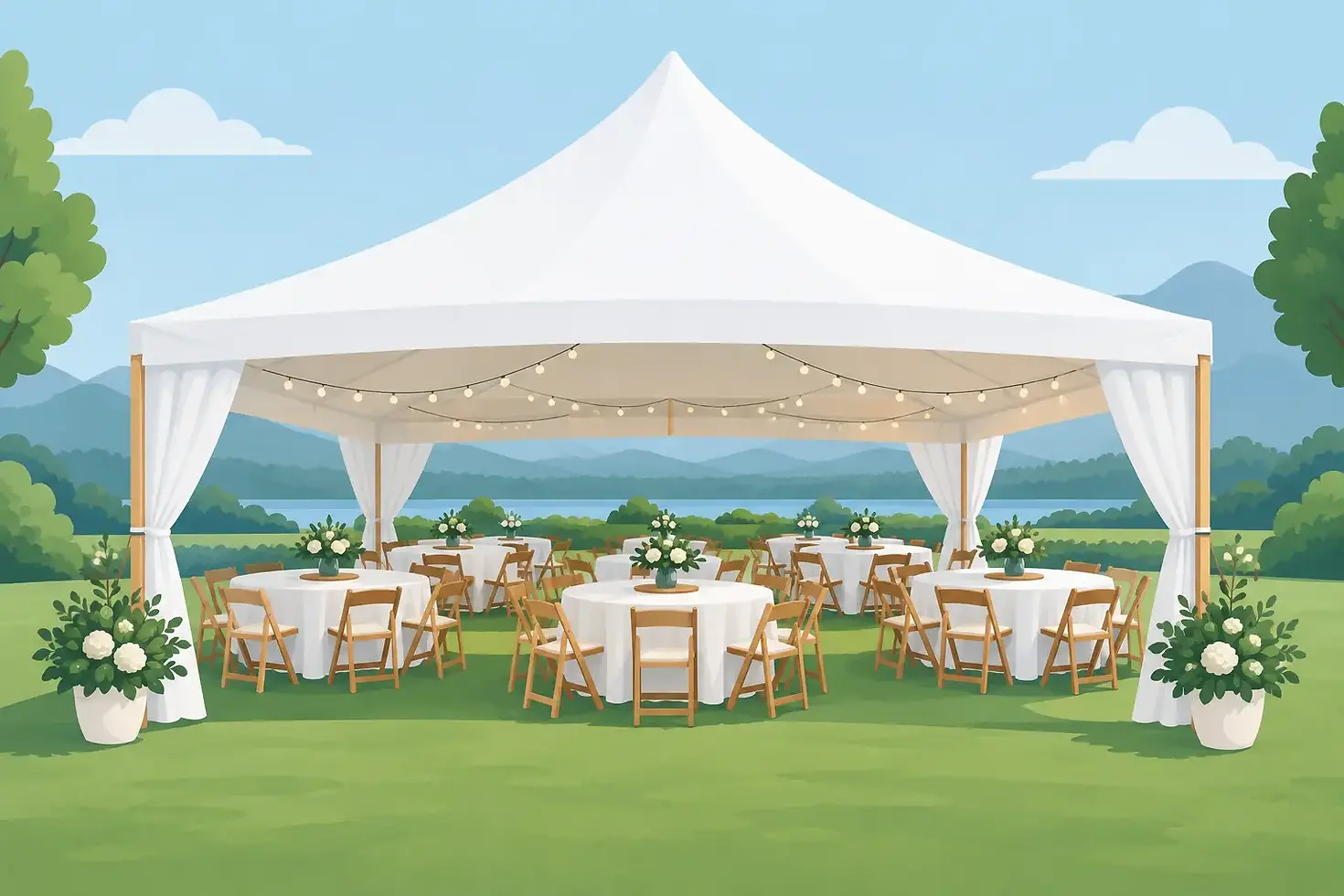
If you are using round tables, allow more space. Round tables create a polished reception look, but they need room for chairs to pull out and for guests to move between tables. A 30-by-30 or 30-by-40 tent will usually create a more relaxed setup.
Cocktail-style party
If most guests will stand, mingle, and use only a few high-top tables or lounge pieces, you can use less square footage per person. A 20-by-30-foot tent may work for 50 guests at a cocktail-style event. Still, consider where the bar, food, and dessert cart will go. Those gathering points take up space quickly.
Cocktail events can feel spacious at first, then get crowded when everyone lines up for food or gathers for a toast. Leaving room around the busiest areas keeps the celebration comfortable.
Ceremony seating
For a ceremony with chairs arranged in rows, plan approximately 8 to 10 square feet per guest. A 20-by-30-foot tent can often cover 50 ceremony chairs, depending on the aisle width and whether you need space for a small altar, floral backdrop, musicians, or photography.
If the tent will cover both the ceremony and reception, choose for the larger setup. It is much easier to have extra covered room than to rearrange an entire event when the weather changes.
Kids' birthday party
For a children's party, the tent is often only one part of the setup. Parents may need seating while kids rotate between a moonwalk, games, snacks, and cake. A 20-by-30 or 20-by-40 tent can provide a shaded home base for tables and chairs, while leaving outdoor space available for entertainment.
Think about who needs shade most. A tent over food, drinks, grandparents, and parents with young children can make the day more enjoyable even when the party activities are outside.
Make Room for More Than Tables and Chairs
The biggest sizing mistake is choosing a tent based only on chairs. Seating is only the beginning. Every extra feature affects the floor plan.
A buffet line needs room for serving tables, food warmers, guests waiting with plates, and space behind the table for hosts or caterers. A bar needs a serving area and enough open room for a line. A dessert cart or cake display needs a visible location where guests can gather without blocking a walkway.
A dance floor changes the calculation even more. For 50 guests, not everyone will dance at once, but a 12-by-12-foot or 15-by-15-foot dance area can still take up a significant part of the tent. If dancing matters, a 30-by-40-foot tent is generally a more comfortable starting point than trying to fit a dance floor into a basic dinner layout.
Also consider décor. Artificial trees, backdrop pieces, throne furniture, gift tables, and statement displays make a celebration feel special, but they should enhance the room rather than squeeze it. Build them into the plan from the start.
Tent Sizes at a Glance
For 50 guests, these are useful planning ranges:
A 20-by-30-foot tent works well for ceremony rows, cocktail service, or light seating with minimal extras.
A 20-by-40-foot tent is a dependable choice for a straightforward seated meal for 50 guests.
A 30-by-30-foot tent offers extra flexibility for round tables or a small buffet.
A 30-by-40-foot tent is best when the event includes dining, food service, décor, dancing, or multiple activity areas.
These are planning guidelines, not one-size-fits-all rules. Table shape, chair size, tent style, and the location of entrances all affect the final layout.
Do Not Forget the Site Around the Tent
A tent needs more than a clear rectangle of grass. The rental team needs access for delivery and installation, and the tent footprint may extend beyond its listed size because of anchoring, straps, or weights. Measure the usable area of the yard, driveway, venue lawn, or patio before choosing a size.
Look for low branches, slopes, utility lines, sprinklers, fences, and gates that could interfere with setup. Ask whether the surface can be staked or whether weighted installation is required. Concrete, asphalt, and some venues may need weights instead of stakes, which can affect placement and available interior space.
Weather should guide the plan, too. Sidewalls can help block wind or light rain, but they also reduce airflow. On warm days, leave room for cooling equipment and keep entrances positioned for a breeze when possible. For evening events, plan for lighting and make sure walkways are clear. A tent keeps guests covered, but thoughtful placement keeps them comfortable.
Plan for Comfort, Not Just Capacity
A tent that technically fits 50 people may not feel good once the party begins. Guests want to pull out their chairs, greet family, carry a drink, and move between the food table and their seats without bumping into each other. This is especially true for weddings, quinceañeras, anniversary parties, and holiday gatherings where people stay longer and dress more formally.
If your budget and space allow, choosing the next tent size up is often a smart decision. The extra room gives you flexibility if the guest count grows, the weather pushes more people under cover, or you decide to add a display table at the last minute. It also gives your décor a better chance to shine.
Pachanga Party Rentals can help bring the whole setup together, from tents, tables, and chairs to linens, cooling equipment, and the finishing pieces that make a celebration feel complete. Share your guest count, event style, site dimensions, and must-have features before reserving. The best tent is the one that gives your 50 guests a comfortable place to eat, laugh, and stay in the moment - whatever the weather decides to do.


Comments